Traversing is the process of identifying the area of a given lot. All the different previous parameters discussed would have to be incorporated in this application in order to have a complete set of information before transferring information in the office.
Showing posts with label E. SURVEYING. Show all posts
Showing posts with label E. SURVEYING. Show all posts
Tuesday, 28 April 2020

5.0 COMPASS MEASUREMENT OF ANGLES AND DIRECTIONS
Another set of data that would have to be taken from the field is that for angles and directions. Although some total stations are able to determine the angles and directions of sights as well, the other older version of levels is inhibited.
There is a big difference in using bearings with the azimuths in surveying but they can be used interchangeably according to the surveyors' discretion.
4.0 VERTICAL DISTANCE MEASUREMENTS
Pacing and taping are used to measure horizontal distances, however, they are impossible to use for measuring elevations, thus, surveyors use levels. There are different levels used from a few decades ago until the evolution of digitized instruments used today, which not only measure vertical but also horizontal distances all in one shot.
Tuesday, 7 August 2018
3.0 HORIZONTAL MEASUREMENTS
The study of Basic Geomatics or Surveying lies only on measuring angles and distances to be able to come up with the area of parcels of land and the volume of soil to be excavated of filled on site. The first goal of determining the boundary lines and determining land areas will be discussed later on the more advanced topics of Basic Geomatics. The volume of earthwork will be a topic covered in Route surveying. These are the different categories of Geomatics that students need to understand in order to prepare for Highways and Railroads Engineering as well as Transportation Engineering.
 |
| courtesy of Opti-cal Survey Equipment |
Horizontal measurements will be basically using the measuring tape. Although ideally, it is easiest to measure distances in level ground. Oftentimes, terrain will require surveyors to use procedures to adapt to the situation. Uneven grounds will ask for “Breaking Tape” method where surveyors will be dividing the distance into segments and measuring each segment accordingly.
Using the tape, students are required to understand the corrections with using the tape. Needless to say, erroneous tape readings will be resulting to erroneous distances later on.
1. Correction due to incorrect tape length. This correction is due to manufacturing defect. Measuring tapes are manufactured either too long or too short from standard. Although this has minimal effect, having the tape used so many times in distances will accumulate to bigger deviation to the real measurement.
2. Correction due to slope. With the sloping terrain, it would be impossible to directly measure the horizontal distances between points. This correction uses the Pythagorean theorem, using the properties of triangles, to compute for the horizontal distance. However, in steeper slopes, the formula would add parameters from binomial expansion.
3. Correction due to temperature. Unless the tape used in surveying is made of metal, temperature is expected to affect the measuring procedure. This is from the basic physics principle that higher temperature tends to expand matter, and likewise, shrink matter in lower temperatures.
4. Correction due to tension. Either simply laying out the tape or plumbing it in, standard tension is required to set the standard measurement of the tape, avoiding folds, wrinkles, or creases, which can cause errors in the reading. When the force pulling the tape is short from the standard, then possibility of wrinkles along the tape is expected. Similarly, if the pull exceeds the standard, the material will be showing longer measurements of the standard units.
5. Correction due to sag. The major cause of error in taping but only present in plumbing in procedures. Sag will always shorten the tape from the standard reading.
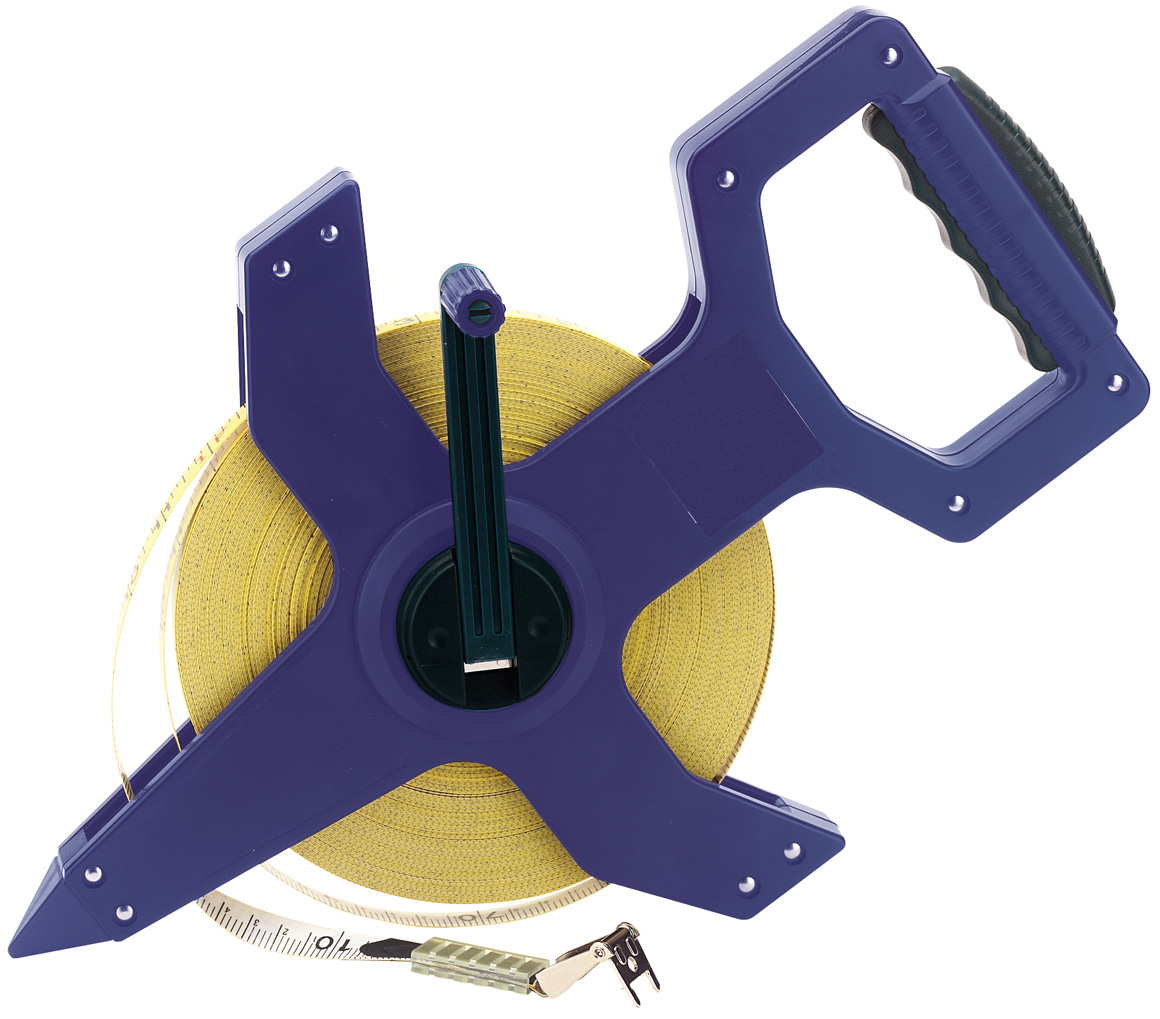 |
| courtesy of Draper 88600 STFG/SG Expert |
Other corrections such as correction due to wind and correction due to alignment complete the set of corrections although they have negligible effect on the reading.
Although studied separately, the errors will always come combined on site. As long as students understand the principles of how these corrections are used then it would be easy to differentiate on which errors occur on site.
2.0 THEORY OF ERRORS IN OBSERVATIONS
Geomatics is the new term for Surveying where as Basic Geomatics will be like Elementary Surveying. This has sprung up from the fact that the surveying tools as well as the procedures has already evolved and advanced. From the theodolites and transits used, surveyors now use the total station which gives information digitally with just one target of the telescope.
Two general classes of surveying considered are plane surveying and geodetic surveying (which we can term as plane geomatics and geodetic geomatics). Plane surveying is the course taken by most students in the Civil Engineering and Architecture departments. This type of surveying considers the ground or surface as flat. On the other hand, Geodetic Engineering students take geodetic surveying wherein they would consider the earth shape as curvilinear, meaning at long distances, surveying measurements would have to be influenced by the Earth's curvature.
The different types of surveys are:
2.0 THEORY OF ERRORS IN OBSERVATIONS
The most probable value is basically using the same formula for averaging. However, in cases where the student is asked to determine multiple most probable values, the equation does not stand as is. It would be more procedural where the student should know in which parameter he will have to compare the given. Comparing the observed and standard value will give you the discrepancy which we can term as error. This error in turn will be divided on how many sets are in the problem to distribute this error equally (the result is what we call correction). From this correction, you can conclude to the most probable value by either adding or subrtracting it (depends on the comparison).
Click here for PDF Lecture Notes
 |
| courtesy of Bureau of Labor Statistics |
Two general classes of surveying considered are plane surveying and geodetic surveying (which we can term as plane geomatics and geodetic geomatics). Plane surveying is the course taken by most students in the Civil Engineering and Architecture departments. This type of surveying considers the ground or surface as flat. On the other hand, Geodetic Engineering students take geodetic surveying wherein they would consider the earth shape as curvilinear, meaning at long distances, surveying measurements would have to be influenced by the Earth's curvature.
The different types of surveys are:
- Cadastral survey - surveys for the purpose of locating property lines and boundaries.
- City survey - surveys dealing with areas and boundaries but for planning expansions and improvement of the city.
- Construction survey - survey conducted to determine the building lines and grades at the construction site.
- Forestry surveys - surveys intently for forest management.
- Hydrographic surveys - those surveys involving bodies of water.
- Industrial surveys - surveys for industrial zoning.
- Mines surveys - surveys used for underground excavations.
- Photogrammetric surveys - surveys using photographs.
- Topographic survey- survey used for determining the terrain of the ground and the other features present.
- Route survey - survey primarily to lay out roads and highways or passages.
2.0 THEORY OF ERRORS IN OBSERVATIONS
The most probable value is basically using the same formula for averaging. However, in cases where the student is asked to determine multiple most probable values, the equation does not stand as is. It would be more procedural where the student should know in which parameter he will have to compare the given. Comparing the observed and standard value will give you the discrepancy which we can term as error. This error in turn will be divided on how many sets are in the problem to distribute this error equally (the result is what we call correction). From this correction, you can conclude to the most probable value by either adding or subrtracting it (depends on the comparison).
Click here for PDF Lecture Notes
1.0 BASIC GEOMATICS: ELEMENTARY SURVEYING
Surveying can be traced down to as early as the Egyptian era when the pharoahs instructed the construction of the massive pyramids. Until present surveying evolves both on the development of instruments used and scope of study. At present surveying not only limits its researches on land and water but also until space.


Elementary surveying is the preliminary course in understanding the gound - elevations and distances. From distance measurements, the course will enable students to measure angles, determine directions, and identify boundaries of specific areas.
This course is a preliminary study to prepare students for topographic surveys from higher surveying, routes in engineering surveys, and eventually will provide needed knowledge in understanding both highway engineering and transportation engineering.
This course covers the following:
- Introduction
- Basic concepts in surveying
- Measurement of horizontal distances
- Measurement of vertical distances
- Measurement of angles and directions
- Traverse and balancing survey
- Directions and distances from coordinates
- Traverse area
- Traverse by coordinates and triangles
Subscribe to:
Posts (Atom)